

Education
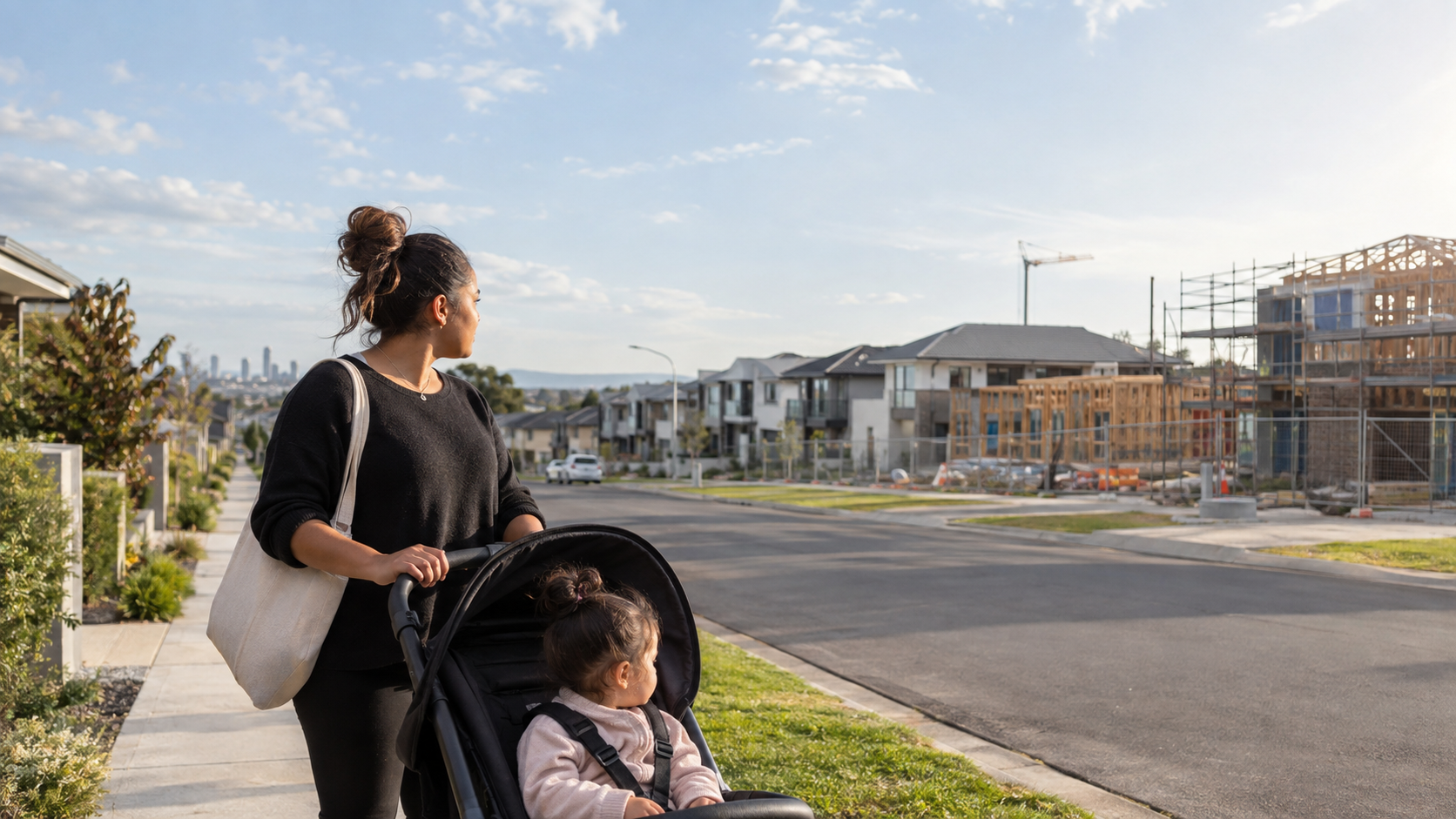

Interest rates might be hurting the Australian property market today, but there's a deeper problem that won't disappear with the next rate cut: Australia still isn't building enough homes where people need them.
That's the argument Massey Archibald put forward during a recent Teach Me About Property Podcast conversation with Felise.
“The biggest problem in the property market in Australia is supply.”
And the latest housing research suggests he's pointing at something much bigger than one property cycle.
Interest rates matter. A lot.
They're reducing borrowing capacity, increasing repayments and making development finance more expensive.
But Australia's longer-term challenge is housing supply.
When new projects become too expensive or difficult to build, fewer homes make it to market. Yet the people who need those homes don't simply disappear.
That's the pressure worth understanding.
Because buyers feel rate rises immediately.
A change in rates can alter your repayments and reduce how much a lender is willing to let you borrow.
Massey and Felise discussed this directly on the podcast.
Using one scenario, Massey described borrowing capacity falling from around $675,000 to $490,000.
His point was that this doesn't necessarily remove the buyer from the market.
It changes what they can afford.
“It pushes them into a different category class of what they can afford.”
Felise immediately saw where Massey was going:
“That's where you're saying that's where the units prices go up.”
A buyer who previously wanted a house may start looking at townhouses or units instead.
Demand moves.
But higher interest rates don't only affect buyers.
They affect the people trying to build the next generation of Australian homes too.
This is where the supply problem gets serious.
Developers face their own borrowing costs.
Then there are labour, materials, land, approvals, infrastructure, consultants and construction costs.
If those costs keep rising while buyers become more cautious, eventually some projects stop making financial sense.
Massey described exactly that situation:
“It means developers are shelving projects. They're not developing them.”
Felise's response was simple:
“It's too expensive.”
This isn't only a TMAP observation.
Australia's Productivity Commission said in July 2026 that the country isn't building enough housing in the places people want to live. It identified land-use restrictions and infrastructure coordination among the major constraints holding back supply.
The IMF has also identified a persistent imbalance between housing demand and supply in Australia, pointing to skilled-labour shortages, expensive land, low construction productivity and complex regulation as structural barriers.
In other words, Australia's housing shortage isn't caused by one thing.
Interest rates are part of the problem.
They're not the whole problem.
Because needing homes doesn't automatically make them viable to build.
Massey described affordable development in the current market as:
“Extremely challenging to do.”
Think about the developer's equation.
Construction costs rise.
Finance gets more expensive.
Buyers lose borrowing capacity.
Confidence weakens.
Sales become harder.
At some point, the project that looked viable on a spreadsheet two years ago doesn't work anymore.
So it gets delayed.
Reduced.
Or shelved.
Massey described the result as:
“A contraction of supply at a time where supply is the one thing that everyone needs.”
That's the contradiction sitting underneath Australia's housing debate.
We desperately want more affordable housing.
But creating affordable housing can be increasingly difficult.
The people who would have lived in them still need somewhere to go.
This was one of the most interesting parts of Massey and Felise's discussion.
They talked about the collapse of a large developer and a claimed pipeline of around 25,000 properties, much of it connected to more affordable parts of Sydney.
Massey described those locations as:
“First home buyer heartland.”
The exact circumstances of any individual developer are complex, but the broader supply lesson is simple.
If a planned housing project disappears, housing demand doesn't disappear with it.
Those households may stay in the rental market longer.
They might compete for established properties.
They might move further away.
They might buy units instead of houses.
Or they might remain living with family.
But they still need housing.
That's why development failures aren't just corporate stories.
They can become housing-supply stories.
Because affordability changes behaviour.
Massey made the argument bluntly during the podcast:
“What can they afford at those numbers? A unit. So what do they buy? Units.”
You can see the logic.
A buyer wants a house.
Their borrowing capacity falls.
The house is no longer possible.
But they still want to own property.
So they move down the price ladder.
That could mean a townhouse.
It could mean moving further from the city.
Or it could mean a unit.
This doesn't mean unit prices automatically rise or that every unit becomes a good investment.
It means affordability can redirect demand rather than eliminate it.
That's an important distinction for investors and first-home buyers to understand.
Potentially.
New developments don't only need builders.
They need buyers.
And many projects rely on early sales to help make the development financially viable.
That's why Massey and Felise's discussion about off-the-plan confidence matters.
Massey's concern was:
“Fear kicks in around buying Off-the-Plan.”
If buyers lose confidence in new developments, fewer people commit.
That can make financing new projects harder.
More projects become unviable.
And fewer homes ultimately get built.
It's a feedback loop:
Higher costs → weaker feasibility → fewer projects → less future supply.
Add weaker buyer confidence and the problem becomes even harder.
Renters are part of the same housing system.
If the number of households needing homes grows faster than available housing, those households still have to live somewhere.
Some buy.
Others rent.
That's why supply shortages can create pressure across both markets.
Massey's view was straightforward:
“Rents keep going up.”
That shouldn't be read as a prediction that every suburb's rent will continually rise.
Property markets are local and economic conditions change.
The broader point is more useful:
When too many households compete for too few suitable homes, affordability becomes harder.
Yes — but they're a different kind of problem.
Interest rates are a powerful cyclical force.
Housing supply is a structural challenge.
Higher rates are currently reducing borrowing capacity and weighing on Australian home prices.
They're also making development finance more expensive.
So the two issues aren't competing explanations.
They're connected.
Higher rates can weaken demand today while simultaneously making it harder to create the housing supply Australia needs tomorrow.
That's why simply waiting for interest rates to change doesn't solve the underlying housing problem.
Don't make property decisions based on one national headline.
“There's a housing shortage” isn't a reason to buy anything with a front door.
And “rates are high” isn't automatically a reason to sit on the sidelines.
Look at the market you're actually considering.
How much housing is being built?
How much has merely been approved?
Are projects actually reaching construction?
What's happening to rental demand?
What property types can local buyers afford?
Is the area adding thousands of apartments, or is new supply heavily constrained?
And most importantly:
Are people actually going to want this particular property?
Australia can have a national housing shortage while an individual suburb, development or property performs poorly.
That's why local research still matters.
Interest rates dominate property headlines because we feel them immediately.
But housing is a long-term game.
The more important question may be:
Where are the homes Australia's growing communities need actually going to come from?
That's what Massey was getting at when he told Felise:
“There's just not enough properties being built.”
Current independent research supports the broader concern: Australia continues to face a structural housing shortage, even while interest rates are putting significant downward pressure on parts of the property market today.
Both things can be true.
And if you're trying to understand where Australian property goes next, you need to understand both.
Listen to the full conversation on the Teach Me About Property Podcast →
Yes. Australia's Productivity Commission said in July 2026 that Australia does not build enough housing in the places people want to live. The shortage varies between locations, however, so national supply conditions shouldn't be used as a substitute for researching the individual suburb or property you're considering.
Both matter in different ways. Interest rates can quickly change borrowing capacity and buyer demand, while housing supply influences how many properties are available relative to the number of households needing them. In 2026, higher rates are weighing on prices even while Australia continues to face longer-term supply constraints.
Housing development can be constrained by expensive land, labour shortages, construction costs, financing costs, planning requirements, infrastructure and low construction productivity. If a project's expected sale value doesn't justify the cost and risk of building it, the developer may delay or abandon it.
No. A national housing shortage doesn't make every property a good investment. Buyers still need to consider their finances, local supply and demand, rental conditions, property quality, purchase price and long-term goals before making a decision.
This article provides general educational information only and does not constitute financial, investment, tax or legal advice. Comments attributed to Massey Archibald and Felise reflect discussion and opinion from the Teach Me About Property Podcast. Market conditions vary by location and change over time. Consider your circumstances and appropriate professional advice before making property or financial decisions.