
Market Updates
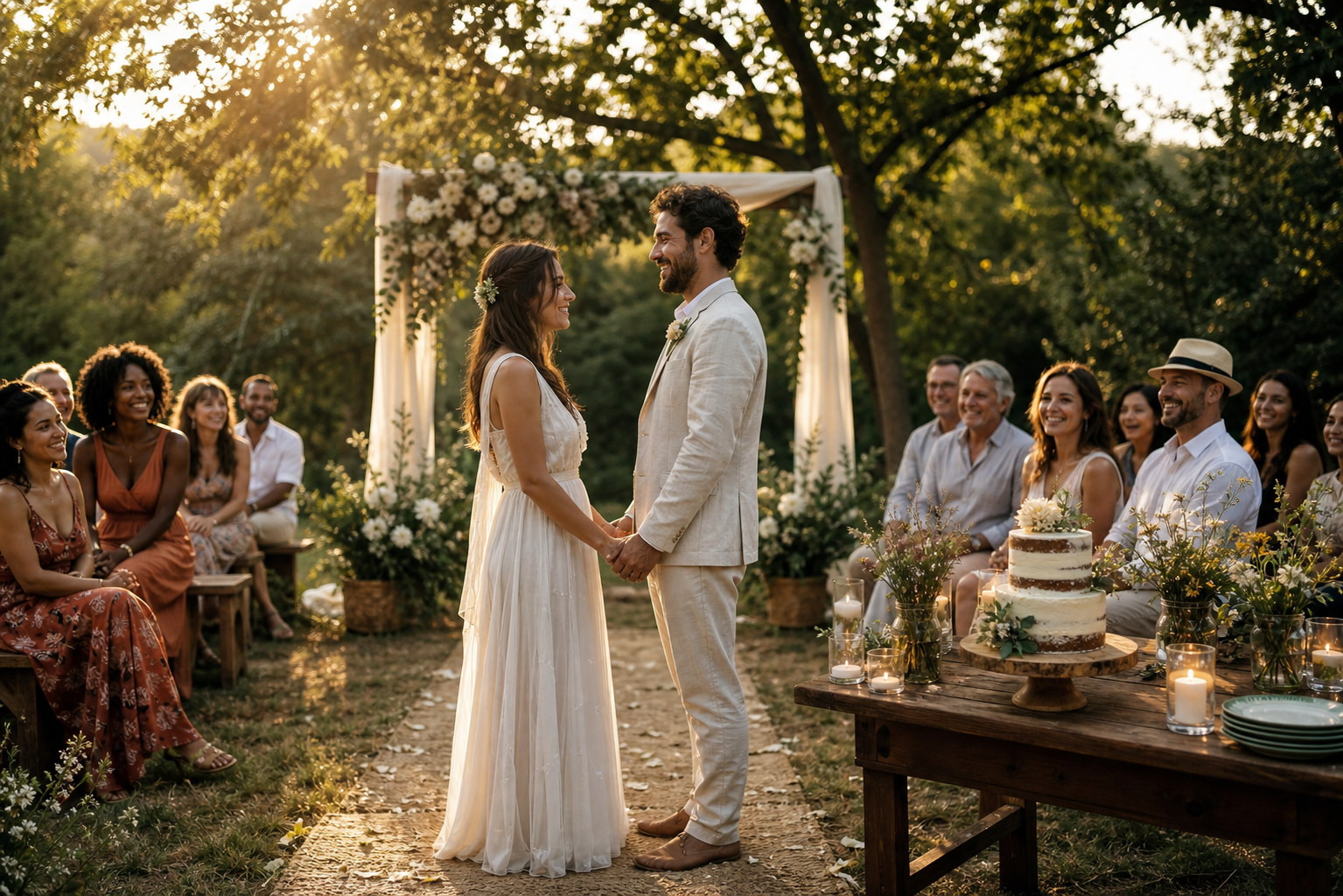

Your wedding lasts a day.
The debt can last years.
That's the uncomfortable money conversation Massey Archibald and Felise had on the Teach Me About Property Podcast after discussing an upcoming family wedding.
Their point wasn't that couples shouldn't celebrate.
It was simpler:
Don't let pressure to create one perfect day become the first major financial burden of your marriage.
Because the habits you establish before the wedding can follow you long after everyone has gone home.
An expensive wedding isn't automatically a financial mistake.
The bigger question is whether you can actually afford it.
Before committing to a wedding budget, couples should talk openly about:
As Massey puts it:
“Let's just do what we can afford.”
That's not particularly glamorous.
But it might be one of the healthiest financial conversations a couple can have.
Because it can make a new couple start married life behind financially.
Massey's discussion begins with his nephew's upcoming wedding.
It's a small, low-key event.
Nothing extravagant.
And Massey likes that.
He contrasts it with couples who spend heavily on the wedding and finance costs they don't have the cash to cover.
“Some people just get carried away with the weddings.”
He talks about couples potentially borrowing tens of thousands of dollars and then spending years repaying money for an event that's already over.
His example is deliberately blunt:
“If you get married in 2026 and you're paying off in 2031...”
That's the issue.
The flowers are gone.
The food is gone.
The venue has moved on to another wedding.
The photos are sitting on your phone.
But the repayments are still leaving your account every month.
No.
The price isn't really the point.
A couple with significant savings might choose to spend $50,000 on a wedding without borrowing a cent.
Another couple could spend $15,000 and put the entire amount on personal loans and credit cards.
The second wedding costs less.
But it could create greater financial pressure.
That's why Massey's definition of going “all out” isn't based purely on the size of the wedding.
He says:
“To me, an all out wedding is where you're not paying cash.”
He then explains the principle:
“You're spending money you don't have on something you can't afford.”
That distinction matters.
The question isn't:
Is $30,000 too much for a wedding?
There isn't one number that works for every household.
A better question is:
What does spending $30,000 do to your finances after the wedding?
That's where the real cost appears.
There's the obvious cost:
interest.
Borrow $30,000 and you may ultimately repay considerably more than $30,000, depending on the interest rate, fees and repayment period.
But there's another cost that's easier to overlook.
Opportunity cost.
Every dollar going toward yesterday's wedding is a dollar that can't go toward something else today.
That might be:
That's why wedding debt isn't just about whether you can make the repayments.
It's about what those repayments stop you from doing next.
This is where the podcast conversation becomes much bigger than weddings.
Massey's concern is that financial decisions at the beginning of a marriage can establish habits.
He says:
“It sets the tone.”
If the first major financial decision you make together is:
We can't afford this, but we'll find a way to finance it anyway...
what happens when the next thing comes along?
A new car.
Furniture.
A holiday.
A bigger home.
Christmas.
Another social event.
The wedding itself isn't necessarily the problem.
The underlying behaviour can be.
Massey explains:
“You can go buy a car you can't afford. You can buy a house you can't afford.”
And Felise agrees that the principle goes beyond the wedding.
That's the conversation couples need to have early.
What kind of financial household are we trying to build together?
Social media has changed weddings.
You don't just see your cousin's wedding anymore.
You see hundreds of them.
Perfect venues.
Designer dresses.
Drone shots.
Flower walls.
Luxury cars.
Destination honeymoons.
Champagne towers.
Cinematic videos.
Everything looks effortless.
And you rarely see the invoice.
Felise raises exactly this point during the podcast.
He says people can see glamorous weddings on Instagram and start believing:
If mine doesn't look like that, it wasn't good enough.
That's a dangerous comparison.
Because you're comparing your actual bank account with somebody else's highlight reel.
You don't know whether they saved for five years.
Their parents paid.
They earn five times what you earn.
The vendors were sponsored.
Or they're carrying debt you can't see.
The photo doesn't tell you.
Massey gets to the heart of it:
“Spend money we don't have on things we can't afford to impress other people.”
That principle applies well beyond weddings.
But weddings create the perfect environment for it.
There are expectations everywhere.
How many guests?
What venue?
What dress?
What car?
How much food?
What entertainment?
Where's the honeymoon?
And because it's supposed to be a “once-in-a-lifetime” event, almost any expense can be rationalised.
We only do this once.
Maybe.
But that doesn't make the bill disappear.
You can have an extraordinary wedding.
You just don't need to financially compete with everyone else's.
Before choosing a venue, sit down together.
No Pinterest.
No Instagram.
No family opinions.
Just the two of you and the numbers.
Talk through these five questions.
Not how much credit is available.
Not how much a lender will give you.
Not how much you expect to receive in gifts.
How much money have you actually set aside for the wedding?
Start there.
This conversation can feel uncomfortable.
Have it anyway.
Student debt.
Credit cards.
Personal loans.
Car finance.
Buy now, pay later.
Tax obligations.
Existing mortgages.
Whatever it is, both people should understand the financial position they're entering.
Marriage doesn't require identical incomes.
It does benefit from financial honesty.
This question can completely change your budget.
Do you want to buy a first home?
Start a family?
Travel?
Build an emergency fund?
Pay off debt?
Start a business?
Invest?
Move interstate?
If spending another $20,000 on the wedding delays a goal you both care about, at least make that trade-off consciously.
There's no need to pretend the answer has to be the same for every couple.
But both partners should know what borrowing means.
What's the interest rate?
What's the monthly repayment?
How long will the debt last?
What's the total amount repayable?
Would you still make the same decision if you saw that total rather than just the monthly repayment?
This might be the hardest question.
You?
Your partner?
Your parents?
Extended family?
Your community?
Your Instagram followers?
There's nothing wrong with wanting the people you love to have a wonderful time.
But the people who care about you aren't the ones who have to make the repayments afterward.
You are.
It doesn't have to be tiny.
And it doesn't have to be cheap.
It needs to fit your financial reality.
That could mean 30 guests in a backyard.
It could mean 150 people at a reception venue.
It could mean saving for two years before getting married.
It could mean getting married sooner and deliberately keeping the celebration simple.
It could mean choosing Friday instead of Saturday because the venue is cheaper.
It could mean reducing the guest list.
Or spending heavily on the things you genuinely value while cutting the things you don't.
Massey's nephew, for example, is having a relatively small Tuesday wedding.
Massey sees wisdom in the simplicity:
“We just wanna be together.”
That's a pretty good filter.
This can be particularly difficult in large, close-knit families and cultures where weddings are community events.
Massey and Felise touch on this from their own Polynesian family context.
A small guest list can sound easy until “immediate family” is already a crowd.
Then there are aunties, uncles, cousins, church friends, family friends and people who have known you since you were a child.
Reducing the wedding can feel less like budgeting and more like rejecting people.
That's why couples need to agree on the principle before the guest-list pressure begins.
You can respect family.
You can celebrate your culture.
You can be generous.
And you can still set a financial boundary.
Those things aren't mutually exclusive.
Before committing to a major wedding expense, run it through this checklist:
| Ask yourselves | Why it matters |
|---|---|
| Can we pay for this without high-cost debt? | Tests affordability |
| Do we both genuinely want it? | Prevents one-sided spending |
| Would we buy it without social media pressure? | Tests motivation |
| What goal are we delaying to pay for it? | Reveals opportunity cost |
| Will we still be paying for it after the wedding? | Makes debt tangible |
| Does this make our marriage stronger financially? | Brings the focus back to your future |
You don't need to say no to everything.
You need to know what you're saying yes to.
The marriage.
Simple, but easy to forget.
The wedding industry naturally focuses on the day.
Your financial life begins the morning after.
Rent or mortgage payments continue.
Food still costs money.
Electricity bills arrive.
Cars need repairs.
Children may come.
Jobs change.
Interest rates move.
Unexpected expenses happen.
Life doesn't care how good your centrepieces looked.
What helps is having two people who can sit at the same table and say:
Here's what we have.
Here's what we can afford.
Here's what matters to us.
Here's what we'll go without for now.
That's what Massey means when he talks about being humble with limited resources.
“With the limited funds that we have, let's have the most amazing time.”
That's very different from saying you can't enjoy your wedding.
It's saying:
Enjoy what you can actually afford.
Money is going to show up throughout your relationship.
Sometimes you'll have plenty.
Sometimes things will be tight.
You'll disagree about priorities.
One person may be a spender.
The other may be a saver.
Your incomes may change.
Your goals will change.
What matters is whether you can make financial decisions together.
That's why the wedding budget can be surprisingly important.
It's one of your first opportunities to practise.
Can you say no together?
Can you compromise?
Can you talk openly about debt?
Can you choose your future over outside expectations?
Can you enjoy what you have instead of financing an image of what you think you're supposed to have?
Those habits will matter far longer than the wedding day.
Because a great wedding is worth celebrating.
But a financially healthy marriage?
That's worth building.
Massey Archibald and Felise talk about weddings, debt, social-media pressure and the financial principles couples can establish from day one on the Teach Me About Property Podcast.
The conversation is part of TMAP's wider approach to the Four Fs: Fitness, Family, Faith and Finance — because building wealth means very little if the decisions behind it aren't helping you build a stronger life.
Listen to the Teach Me About Property Podcast on YouTube →
Borrowing for a wedding creates repayments after the event has finished and can reduce the money available for other goals. Whether it is manageable depends on the couple's income, existing debts, interest rate and wider financial position. Couples should understand the full repayment cost before taking on wedding debt.
There is no universal amount that every couple should spend. A more useful limit is one that fits your savings, income and priorities without creating financial pressure you aren't comfortable carrying. The same wedding budget can be manageable for one household and financially damaging for another.
Yes. Useful conversations include income, debts, savings, spending habits, financial responsibilities, future goals and expectations around shared money. The aim isn't for both partners to have identical financial histories. It's to make sure both understand the position they're entering and can make major decisions together.
Using savings avoids loan interest and future repayments, but couples should still consider whether spending all their available cash would leave them without an adequate financial buffer. The goal isn't simply to avoid borrowing; it's to make the wedding fit safely within the household's broader financial position.
Prioritise the parts of the wedding you genuinely value, set the total budget before booking suppliers, control the guest list and compare alternatives for venues, dates and services. Most importantly, separate what you and your partner want from expenses driven mainly by family, cultural or social-media expectations.
Teach Me About Property (TMAP) helps everyday Australians understand the connection between property, money and the life they're trying to build.
Through education, mentorship and the Teach Me About Property Podcast, Massey Archibald and Felise explore the Four Fs — Fitness, Family, Faith and Finance — and the practical decisions that can strengthen each one.
Because financial success isn't only about what you own.
It's also about how you live.
This article provides general educational information only and does not constitute personal financial, credit, tax, legal or relationship advice. Examples are illustrative, and comments attributed to Massey Archibald and Felise reflect the discussion and opinions expressed in the relevant Teach Me About Property Podcast episode. Consider your own circumstances and appropriate professional advice before taking on debt or making significant financial commitments.